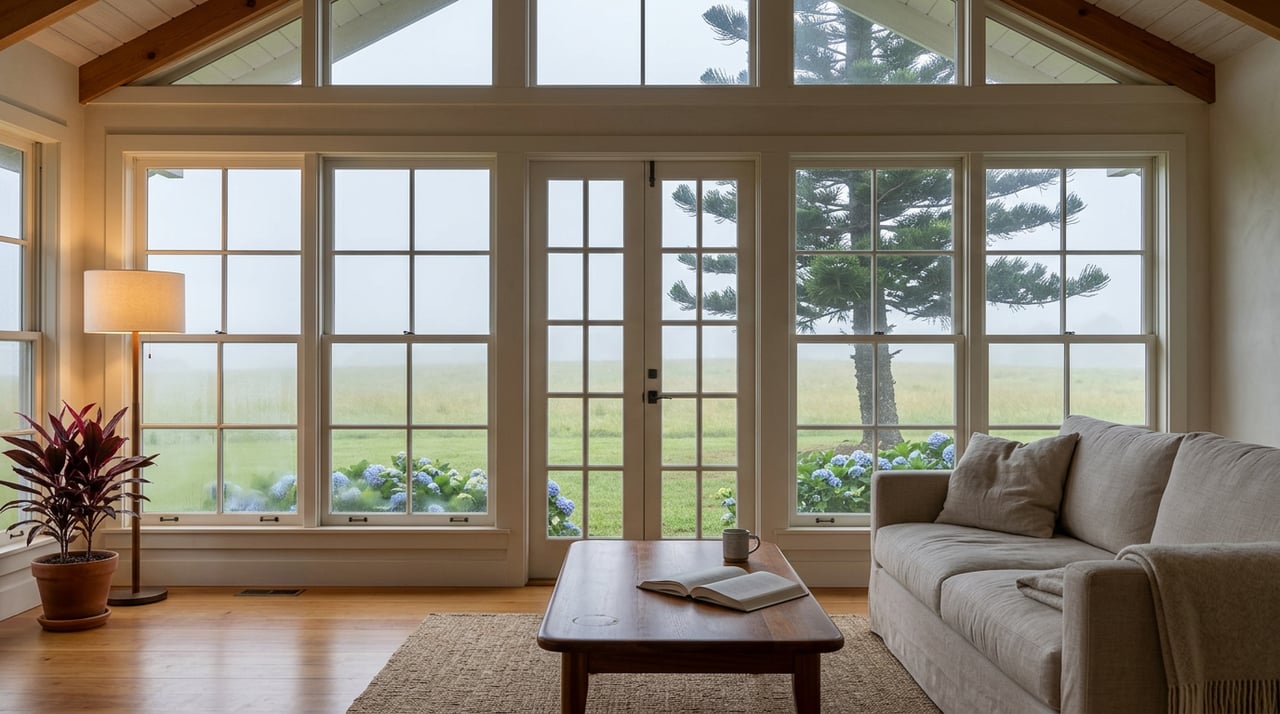
Kamuela Wet Side vs Dry Side Homes: What Changes Price
August 6, 2026
August 6, 2026
Ask a Waimea resident where they live and the answer usually comes back with a qualifier: wet side or dry side. It sounds like small talk. It is really the first question of the transaction. A mile of Māmalahoa Highway separates two homes that share a zip code, a school, and a farmers market, and can differ in annual rainfall by fifty inches, in insurance conversations, and in what the same dollar buys. If you have been reading Big Island listings from the mainland, that mile is probably the variable you are missing.
Before we get to price, a friction that catches remote buyers by surprise: Waimea town and many surrounding neighborhoods are on county water, but some larger ag and ranch parcels rely on catchment or shared ag water systems, and the Department of Water Supply has had meter waitlists in this area. A listing can look ready. The meter status decides whether it actually is.
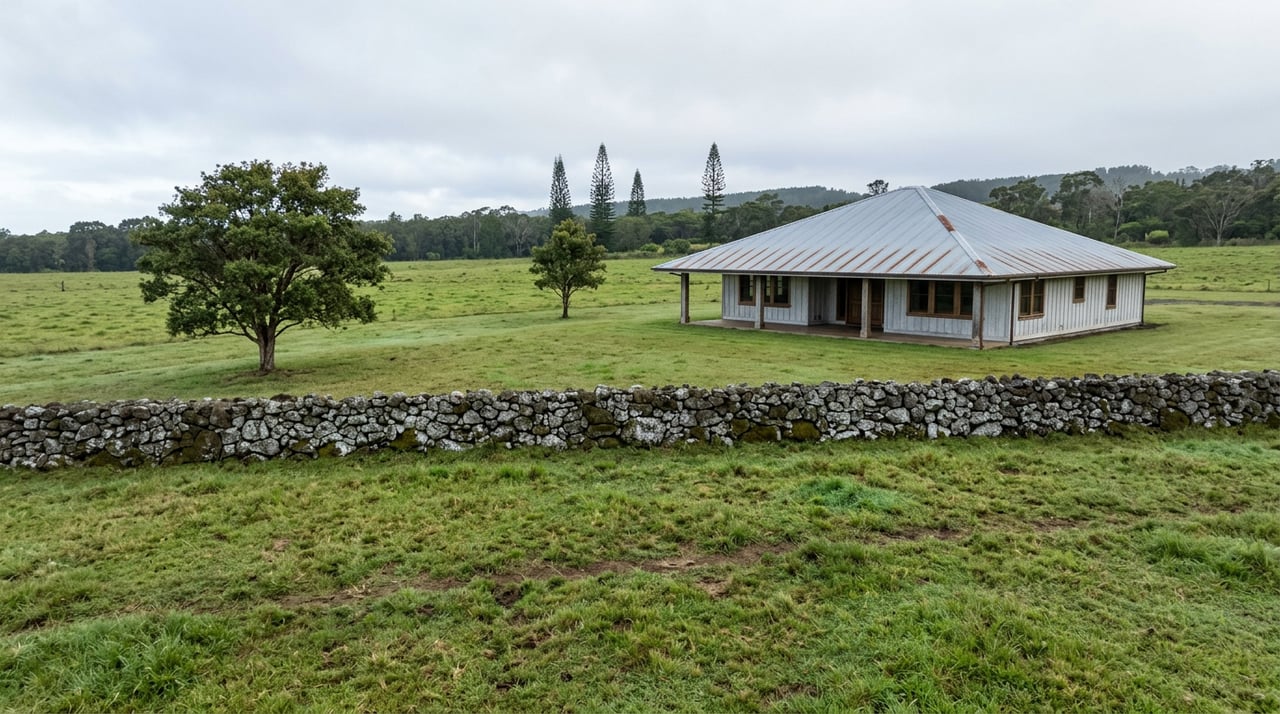
Waimea sits at roughly 2,690 feet above sea level overlooking the Kohala Coast, a long-established community of ranchers with a population of more than 7,000. It is not upcountry in the usual Big Island shorthand. It is the boundary itself, the seam where trade-wind moisture from Hilo runs into the leeward rain shadow of Kohala and Kona.
The rainfall numbers make that seam concrete. The dry side of Waimea gets an average of just 15 inches of rain per year and sees plenty of sunshine. The wet side gets an average of 65 inches per year and can sometimes be downright cold. Same town, same commute to Merriman's, same drive to Kahilu Theatre. A four-fold spread in what falls on the roof.
Pricing follows the water. In the Sandalwood at Waimea subdivision, one of the town's best-known ag-zoned enclaves of one-acre-plus lots, homes on the makai side with the ocean-facing views commonly clear a million dollars, while properties closer to the main road tend to sit in the low $800,000s. That is not luxury versus starter. It is orientation, view corridor, and how much of the year the lawn stays green without irrigation.
The median tells you what closed. It does not tell you which side of the highway closed.
The headline numbers this year read balanced, not frenzied. Locally, agent-broker Judy S. Howard reports Hawaiʻi Island's single-family market through mid-2026 as a balanced, active market where good homes priced right are selling in about a month, with buyers who do their homework finding real value, and the biggest mistake being treating the whole island as one market. In Waimea proper, she describes a range from entry-level homes in the $400,000s to ranches and estate properties well above $1M. Redfin's trailing three-month snapshot in June 2026 put the Waimea median at $1.1M with average days on market at 138, up from 120 a year earlier.
Those two numbers describe the same town and do not contradict each other. They describe different subsets of it. Which subset a buyer lands in depends less on price filter than on which subdivision the listing sits in.
| Neighborhood | What defines it | What tends to trade |
|---|---|---|
| Luala'i at Parker Ranch | Central, town-adjacent, mixed | 3–4 BR homes, walk to Parker Ranch Center |
| Sandalwood at Waimea | ~1-acre ag lots, seasonal streams | Ocean-view makai lots at a premium |
| Puukapu Homesteads | 5,000 sq ft to 34 acres, mostly Ag zoning | 1940s-to-present homes, wide size range |
| Waikii Ranch | 10–53 acre equestrian parcels | Ranch homes, riding trails, polo field |
Sandalwood at Waimea was built in 1994, with approximately 30 lots of 1 to 1.5 acres and 3 to 5 BR homes, Kohala Mountains and ocean views for some lots, agricultural zoning, and two seasonal streams winding through the subdivision. Waikii Ranch is known as the only equestrian community in Hawaii, with lots of 10 to 53 acres and features including riding trails, polo field, and riding arena. A quiet month in Waikii can move the trailing median more than a busy month in Luala'i. The island number moves. The neighborhoods do not.
Howard's read on the broader South Kohala picture in 2026 backs up the pattern of a more discerning market: average sales prices rose to $1.99M, up 12% year-over-year, with total sales volume up 25% and sales above $1M increased 17% year-over-year, though the market is becoming more selective with inventory up approximately 15% compared to Q1 2025, days on market increasing, and price reductions appearing more frequently. Statewide, mortgage rates were hovering around 6.36% as of mid-May per Freddie Mac. Buyers are pricing risk. Sellers with wet-side moisture problems or ambiguous water sources are wearing that on days-on-market.
The Department of Water Supply's Waimea office is at 65-1234 Opelo Road, and it is the first phone call I make on any acreage listing. The DWS Waimea system blends treated stream diversions from the Waikoloa and Kohakohau streams with groundwater, including a Parker Ranch well source, and planning documents describe several large reservoirs with combined untreated storage of about 158.5 million gallons. Impressive on paper. What matters at closing is narrower: is there a meter on this specific TMK, and if not, what does it take to get one?
The practical protocol before writing an offer:
None of this appears on a listing card. All of it will appear at the appraisal.
Buyers moving from the mainland often assume more acres equal more house, or more houses. Ag zoning in Hawaiʻi County does not work that way. As agent Beth Thoma Robinson observed in a Hawaii Life market note, a 3-acre parcel can be as expensive as a 10-acre or 20-acre parcel because the price isn't based on the agricultural production capacity of the land, and a single parcel of any size can only have a single dwelling unless the agricultural use is sufficient to require farm workers in need of housing. Restated: on ag land you are usually paying for view, access, water, and one legal residence. The extra acres are amenity, not additional building rights.
That single fact resets a lot of pro formas. A buyer who wanted to build a main house and a rental cottage on five ag acres is often looking at a very different plan by the second showing. Puukapu Homesteads, with lot sizes from 5,000 square feet to 34 acres and mostly agricultural zoning, is a common place this conversation happens.
Both, and this trips up out-of-state searches. The town is Waimea, but its post office is named Kamuela to avoid confusion with Waimea on Kauaʻi and Oʻahu, so mailing addresses and many listings read Kamuela. If you filter only by one spelling on a portal, you will miss inventory. If you filter only by "Waimea," you will also see homes on Kauaʻi that share almost nothing with our upcountry ranch town. Redfin's own Waimea housing pages illustrate this: one page reports a $535K median for the trailing three months ending May 2026, the other reports $1.1M. They are two different Waimeas.
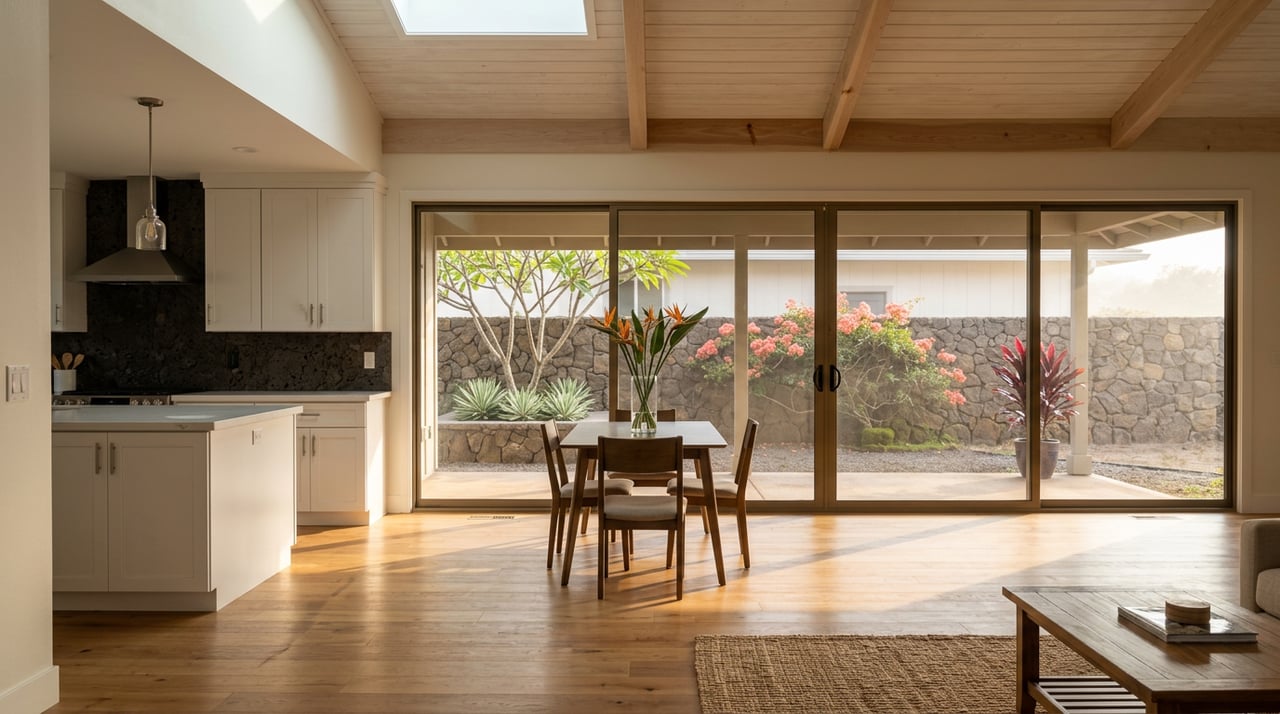
Does the wet side really cost less? On average, and with real exceptions for view and proximity to town, yes. Home prices on the wet side are a bit lower, and it is one of the few places in Hawai'i where you can enjoy a more seasonal lifestyle. Buyers who value pasture greenery and cooler nights often prefer it. Buyers who want reliable solar production and less moisture management usually stay dry-side.
How long is a typical drive to the Kohala Coast beaches from Waimea? Twenty to thirty minutes down Waikoloa Road or Kawaihae Road, depending on where in town you start. Many resort and hospitality workers commute up to Waimea specifically for the cooler nights.
Is catchment a dealbreaker for financing? Not automatically. It is a variable that some lenders and insurers treat differently than county water. On a wet-side property, catchment is often perfectly workable. On a dry-side property with 15 inches of annual rainfall, the math is worth doing carefully before you commit.
What is the equivalent of a home inspection punch list for wet-side homes? Roof age, gutter and downspout condition, attic ventilation, under-floor ventilation, exterior paint system, and any signs of prior mold remediation. Wet-side homes can be wonderful. They demand different maintenance than a Kona coast condo.
The Kamuela market rewards the buyer who asks two questions before price: which side of the highway, and where does the water come from. Both answers are knowable before you fly out. Neither shows up on the listing photos.
If you are weighing a move to Waimea from the mainland, or comparing an upcountry home against a Kohala Coast condo, Denni Keyes is glad to walk the specific TMK with you, ask DWS the awkward questions, and read the neighborhood behind the median. Let's connect.
Stay up to date on the latest real estate trends.
I'm not just a real estate agent — I'm a neighbor, a parent, and a proud member of this island community. My commitment to communication, integrity, and purpose means you'll always have a trusted partner by your side throughout your real estate journey.
69-201 Waikoloa Beach Dr Ste 505 Waikoloa, HI 96738