The $750,000 Line That Splits Waikoloa Village's Housing Market in Two
August 27, 2026
August 27, 2026
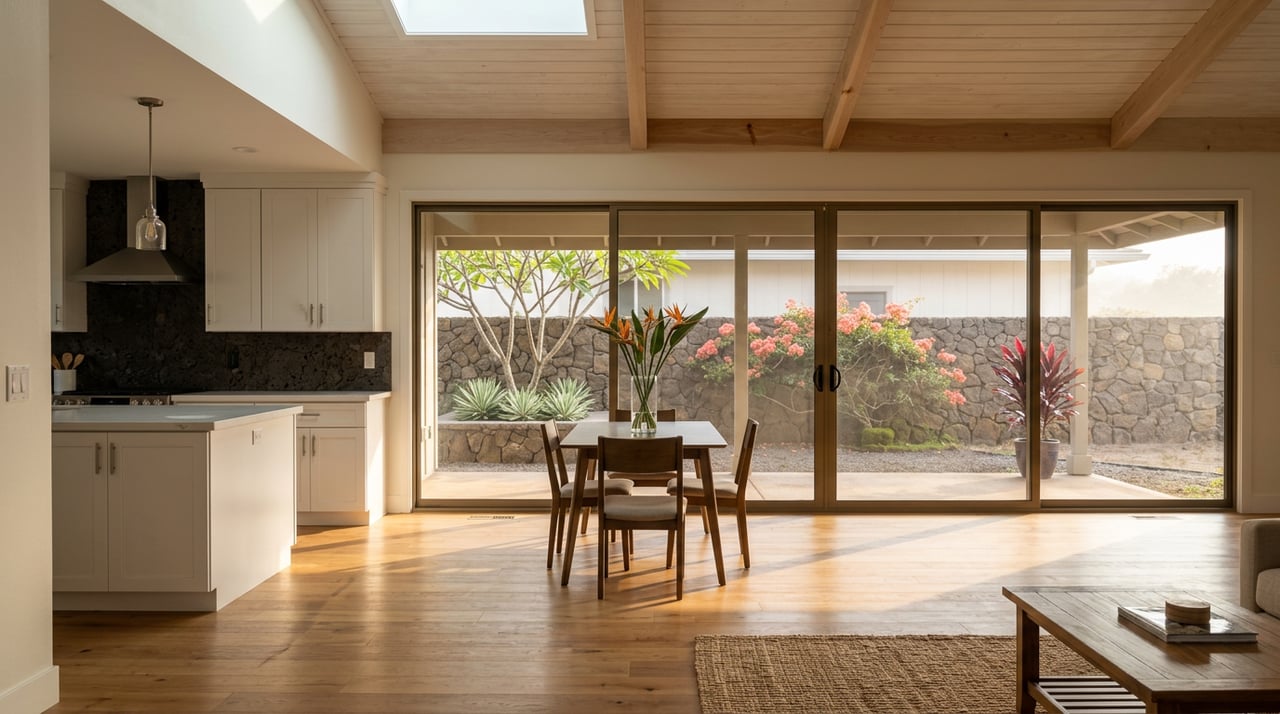
Picture two three-bedroom homes in Waikoloa Village, half a mile apart, listed the same week in January. One is priced at $735,000. The other at $775,000. Same school zone, same golf course view corridor, same drive to the Highlands Shopping Center. A buyer scanning the portals would treat them as interchangeable, a rounding error in an already tight price band.
They are not interchangeable. According to the local brokerage market report covering January through March 2026, homes priced under $750,000 in Waikoloa Village sold in an average of just 14 days and closed near full asking price. Cross that line into the $750,000 to $1,000,000 range, and the report's own language is blunt: the picture flips. Sales in the Village overall came in slightly below the same period in 2025, and homes took longer to move, which the report attributes to buyers doing more homework before committing.
That is not a smooth gradient where price rises and speed falls a little at a time. It is a threshold. And if you are pricing a listing, writing an offer, or just trying to figure out what your budget actually buys in this neighborhood, the threshold matters more than the median.
Part of the confusion starts before you even get to the Village. "Waikoloa" on a for-sale sign or a portal search can mean the inland residential community six miles up from the coast, the beachfront resort corridor with its golf courses and condo towers, or both, blended into one number.
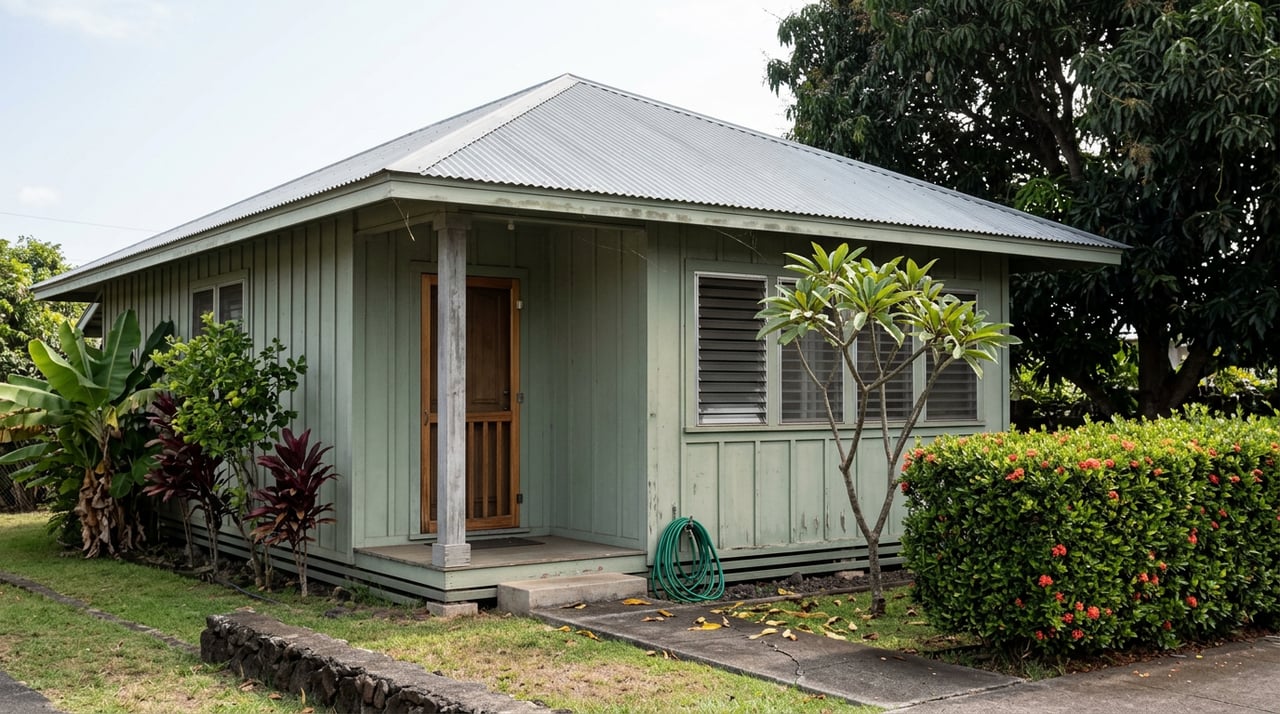
Waikoloa Village began in the 1960s as workforce housing for the resort down the hill, built out by Boise Cascade Properties as a master-planned community on land that had passed through Parker Ranch. It sits around 1,000 to 1,500 feet above sea level, cool enough to feel like a different climate zone than the coast, and it has grown into a full residential town with its own elementary-intermediate school, post office, fire station, and an 18-hole course designed by Robert Trent Jones Jr. None of that is resort product. It is a neighborhood where people actually live year-round, distinct from the vacation-rental-heavy condos closer to the water.
Redfin's blended figure for "Waikoloa" as of February 2026 put the median sale price at $817,000, down 12.9 percent from a year earlier, with homes averaging 138 days on market. That single number folds together the Village's entry-level resale homes, its move-up inventory, and whatever coastal transactions happen to fall inside the same geographic tag. It tells you almost nothing about how fast a specific home in a specific price band will actually sell, because the market underneath it is not one market. It is at least three, and the Village alone splits again once you look inside it.
The report's tale of two markets is specific enough to work with. Under $750,000, Village single-family homes moved in an average of 14 days and sold close to list price in the first quarter of 2026. That is a fast, clean, low-drama transaction pattern, the kind sellers hope for and buyers dread competing against.
Step over the line and the pace changes. The report frames the wider Village single-family slowdown, softer volume than the same quarter in 2025 and buyers taking more time to decide, as the pattern that takes over once price clears the $750,000 mark. Buyers with that much room in their budget are not moving fast just because a home hits the market. They are comparing, waiting, and negotiating in a way that entry-level buyers under $750,000 largely are not.
Here is the piece that makes the line make sense rather than looking arbitrary: in late March 2026, Makana Kai at Wehilani brought a fresh batch of brand-new Castle and Cooke units to market, two and three-bedroom homes priced from $575,000 to $670,000. New construction at that price point in the Village is rare, and it matters here specifically because it sits just under the $750,000 line. Every entry-level buyer who might otherwise have stretched toward $750,000 now has a brand-new alternative that tops out well below it. That keeps demand concentrated and competitive in the sub-$750,000 resale tier, while thinning out the pool of buyers willing to push past it without a very good reason.
| Segment | Q1 2026 pattern | What it signals |
|---|---|---|
| Village single-family, under $750,000 | Averaged 14 days on market, closed near full asking price | Fast, competitive, buyer pool is deep and decisive |
| Village single-family, $750,000 to $1,000,000 | Slower overall pace, more deliberation before offers | Buyers are comparing more, less urgency to move fast |
| Village condos | Over half of closed sales under $500,000 | Entry-level demand is the engine of this segment |
| New construction (Makana Kai at Wehilani) | 2 and 3-bedroom units, $575,000 to $670,000, added late March | Absorbs entry-level demand right up to the $750,000 edge |
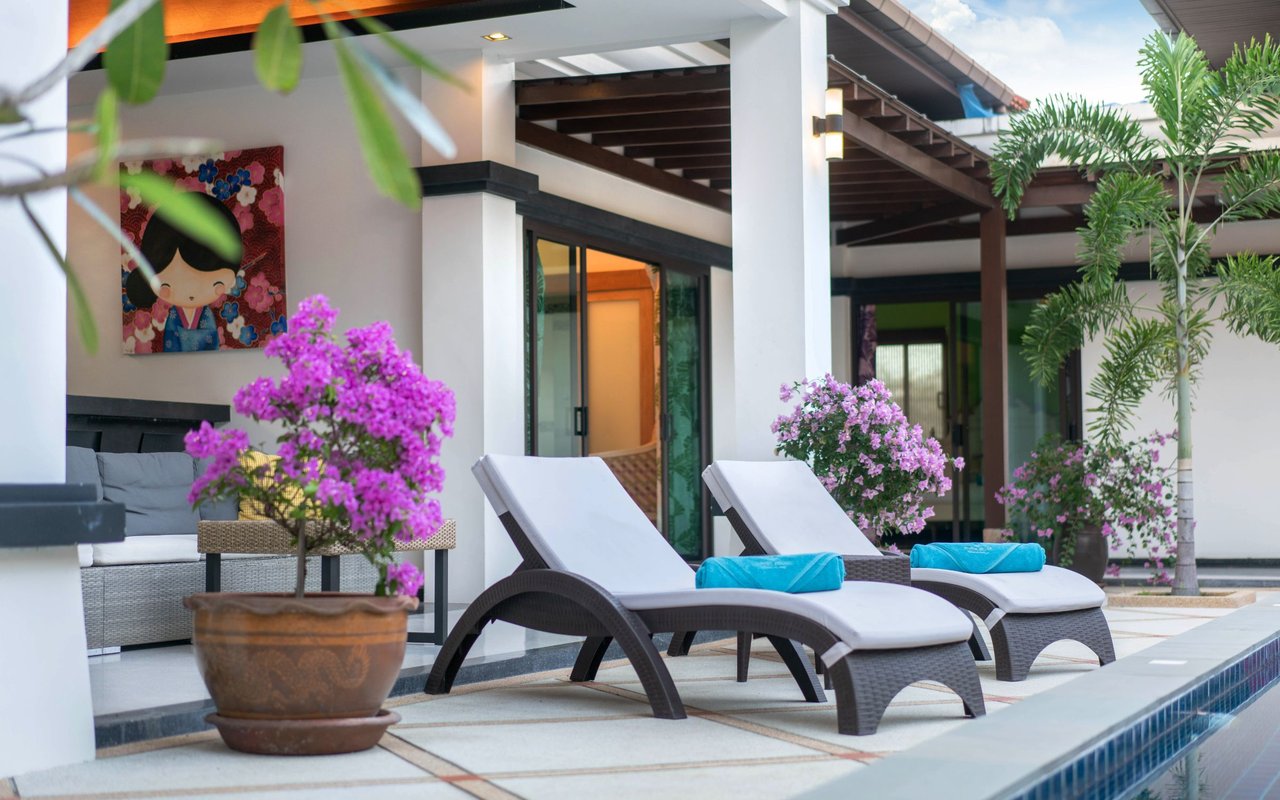
The Beach Resort condo market ran on a completely different mechanism in the same quarter, which is useful precisely because it shows the Village's pattern is not just "expensive things move slower." At the resort, the $1,000,000 to $1,500,000 band drove nearly half of all Q1 closings and moved fastest, averaging 64 days on market. Buyers in that range were decisive once the right unit appeared. Above $1,500,000, the opposite held: an average of 146 days on market, with sellers typically conceding 6 to 7 percent off list price to close the deal.
Supply told its own story here too. Fairway Villas at Waikoloa Beach Resort alone accounted for more than 30 listings across all statuses since January 2025, the most of any single project at the resort, which gave buyers real options in that complex while sellers in other resort projects faced a tighter, less forgiving field of competition. New listings across the resort dropped sharply compared to the same quarter in 2025, which is part of why well-matched buyers in the middle of the price range moved quickly. There was less to choose from, so decisive offers won.
So two neighborhoods that share a name and a zip code produced two opposite shapes. In the Village, the fast lane is the cheap lane and the expensive lane slows down. At the Beach Resort, the fast lane sits in the middle of the price range and the top slows down. A buyer or seller who assumes "Waikoloa is Waikoloa" is applying the wrong mechanism no matter which side of the mountain they are on.
If you are selling a Village home priced at $745,000, you are in the fast, competitive tier where buyers move quickly and pay close to ask. If your comps push you to $765,000, you are entering a different negotiation entirely, one where buyers take longer to commit and where you should expect to hold the listing, and possibly adjust price, for longer than the sub-$750,000 comps down the street would suggest.
If you are buying and your pre-approval tops out right around $750,000, it is worth knowing that a small stretch upward does not just cost you more money. It moves you into a slower, more deliberate buyer pool where you have more room to negotiate on price and terms, because the urgency that defines the segment just below you is not present in the segment just above it.
New listings were down across all three of these markets in the first quarter of 2026, Village single-family, Village condos, and Beach Resort condos alike. Fewer new listings means fewer fresh comps to calibrate against, which makes local, current-quarter data more valuable than a portal's rolling twelve-month median. A number that is even a few months old can miss a shift like this one entirely.
Does the $750,000 line apply to Village condos too? No. Village condos have their own break, and it sits lower. More than half of closed condo sales in the first quarter of 2026 came in under $500,000, which is the entry-level tier doing most of the work in that segment. The forces are similar in spirit, new construction and affordability pulling demand toward a specific ceiling, but the number itself is different for condos than for single-family homes.
Is the Beach Resort showing the same kind of split? Yes, but it runs in the opposite direction. The middle of the resort's price range, $1,000,000 to $1,500,000, moved fastest in the first quarter of 2026. Above $1,500,000, the pace slowed and sellers gave up more on price to get a deal done.
Will this pattern hold later in 2026? The report notes that new listings were down across the board heading into the second quarter, which tends to reinforce whatever pattern is already in place rather than disrupt it. A tight, well-priced sub-$750,000 tier with limited new competition is likely to keep behaving the way it did in the first quarter unless a wave of new listings changes the supply picture.
If you are trying to figure out which side of that line your budget or your listing actually falls on, that is exactly the kind of question worth a real conversation rather than a portal search. Denni Keyes has spent years watching these Kohala Coast and Waikoloa Village patterns shift quarter to quarter, and can walk you through what the current numbers mean for your specific price point. Let's Connect.
Stay up to date on the latest real estate trends.
I'm not just a real estate agent — I'm a neighbor, a parent, and a proud member of this island community. My commitment to communication, integrity, and purpose means you'll always have a trusted partner by your side throughout your real estate journey.
69-201 Waikoloa Beach Dr Ste 505 Waikoloa, HI 96738