Kapaau Small Lots and Agricultural Zoning Explained
August 13, 2026
August 13, 2026
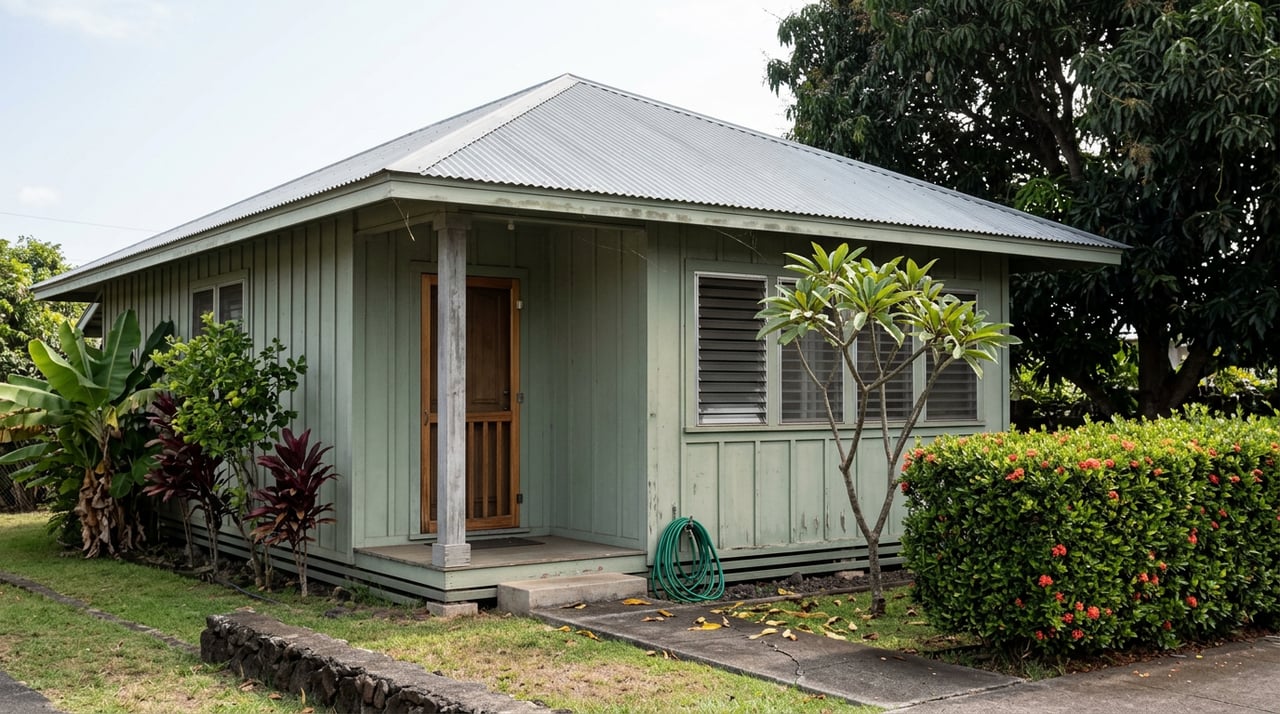
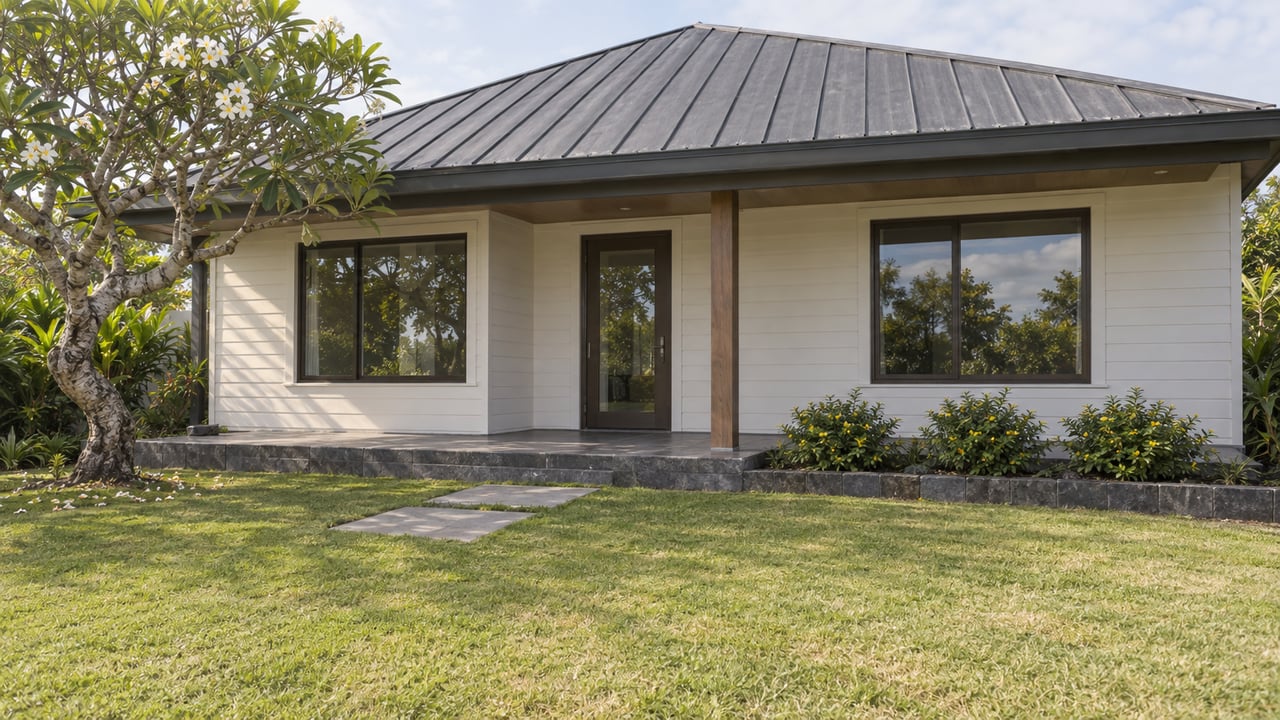
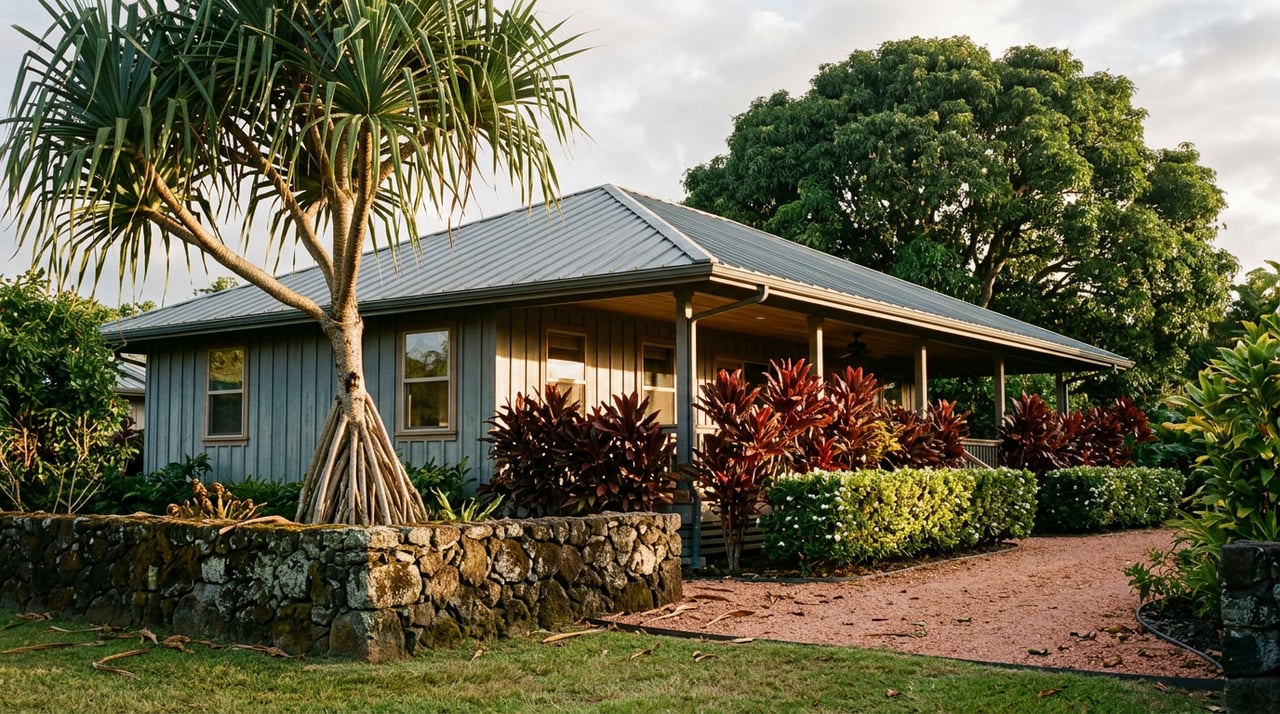
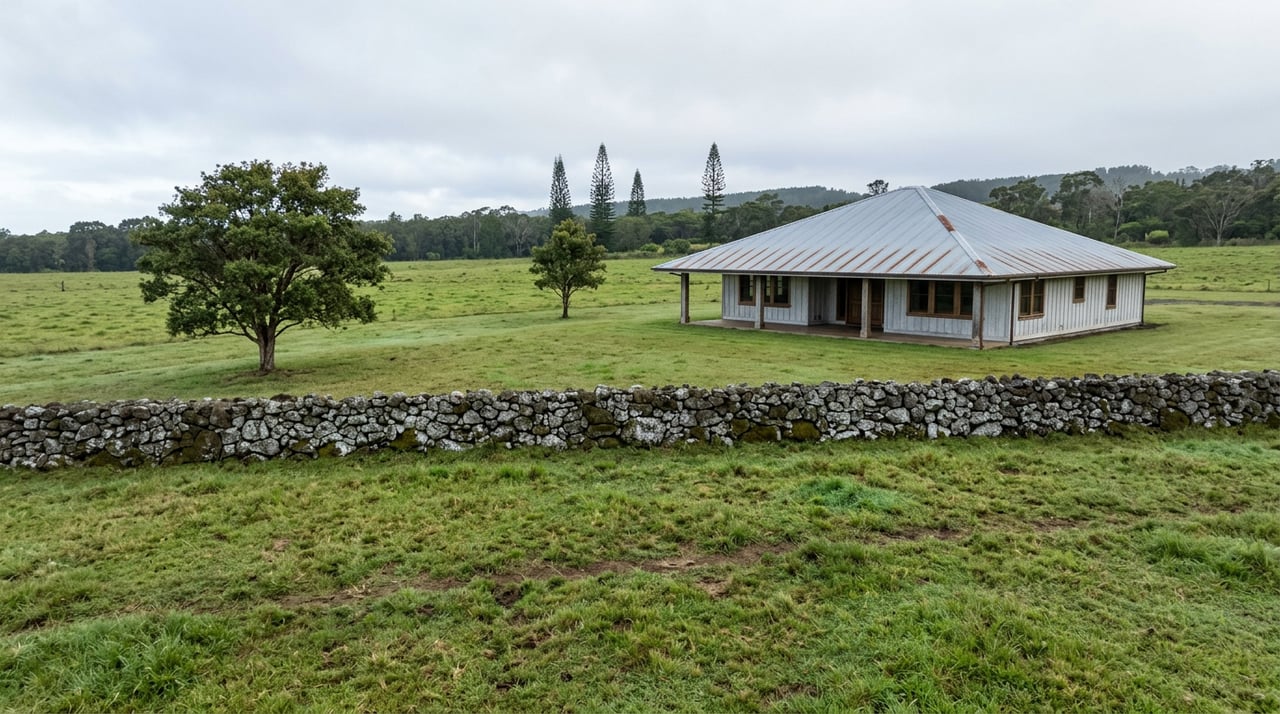
Drive up Kynnersley Road on the edge of Kapaau and you pass two kinds of property within a quarter mile of each other. One is a modest plantation-era house on a lot you could walk across in under a minute, the kind of parcel that once housed a mill worker's family a hundred years ago. The other is open pasture, acre after acre of it, rolling toward the ocean with a view that makes the little house's yard look like an afterthought.
On paper, the pasture should win every comparison. More land, more privacy, a better vantage point for the sunsets North Kohala is known for. In practice, the small lot often holds its value just as well, sometimes better, and the reason has almost nothing to do with square footage or finishes. It has to do with a zoning rule that most listings never mention, because most agents never have to explain it to a buyer who already knows.
Next City reports that most of Kohala is zoned for agriculture and that building sites generally need at least 20 acres. That constraint has shaped the district's affordable housing conversation for years. Beth Robinson, a real estate broker on Hawaiʻi Island and board secretary of the Kohala Community Land Trust, has pointed to that same 20-acre threshold as the core obstacle to building anything smaller in Kohala.
That is why the nonprofit's strategy skips new construction almost entirely. Instead, Next City's reporting on Hawaiʻi's community land trusts describes the organization's plan to acquire existing plantation-era homes on lots closer to 10,000 or 15,000 square feet. Those homes are on the ground in old Kapaau, clustered near Kamehameha Park, along Union Mill, through Halaula.
The Kohala Community Land Trust was reestablished in 2023 by eight North Kohala residents working from the affordable housing recommendations in the district's 2008 community plan. Denni Keyes is one of the founding board members, alongside Robinson and fellow North Kohala resident Teri Takata. Their focus on small, legally grandfathered lots is not incidental. It is the only realistic path to adding affordable housing stock in a district where raw land requires 20 acres to build on.
That same scarcity shows up as a quiet contradiction in the market data, and it explains why two accurate reports about the same district can point to different conclusions.
One island-wide comps report counted 22 residential sales in North Kohala over the twelve months ending April 17, 2026, at an average price of $1,265,374, describing it as the thinnest market on the island. A separate report focused specifically on the Hawi-to-Kapaʻau zip codes, published in January 2026 by a Hawaiʻi Life broker who tracks that submarket directly, counted 55 homes sold across all of 2025, with the median price rising from $850,000 in 2024 to $970,000 in 2025. Almost half of those 2025 sales, 26 of the 55, closed at $1 million or more.
Neither number is wrong. They are drawing different boundaries around the same geography, one folding in the gated ranch communities near Kawaihae and one isolating the town-adjacent zip codes where small legal lots and large ag parcels sit side by side. A buyer comparing "North Kohala averages" across sources without knowing which boundary each source used is comparing two different markets and calling it one.
The practical range inside Kapaau in early 2026 illustrates the same split. The least expensive active listing that January was $524,999, a home needing renovation in the Ainakea subdivision, a small-lot pocket close to town services. At the other end, a 20-acre ocean-view property in Puuepa Ranch was listed at $3,995,000, and a west-facing parcel in Puakea Bay Ranch was asking $3,595,000. The highest recorded sale of 2025 in the broader Kohala district was $5,750,000, for a home on 21 acres in the gated oceanfront subdivision Ranch at Puakea.
That spread is not simply luxury versus starter home. It tracks legal buildability. The $524,999 fixer sits on a lot that already exists and already qualifies to hold a structure, no acreage assembly required. The multimillion-dollar acreage listings are priced for land that meets the 20-acre threshold on its own. A buyer optimizing for the lowest entry point into Kapaau is often optimizing for exactly the kind of small legal lot the land trust is trying to preserve, which puts individual buyers and a community nonprofit competing for the same narrow slice of inventory.
More recent rolling data reinforces how tight that slice has become. Looking at the trailing twelve months through May 2026, the median sale price across the Hawi-Kapaau area reached $1,370,000, up 41% year over year, with an average sale price of $1,493,127 and homes spending an average of 89 days on market before selling. That is a market moving fast at the top.
If a Kapaau listing catches your eye because of its lot size relative to price, the zoning history of that specific parcel matters more than almost anything else in the disclosure package. Before assuming a lot is buildable or expandable, a buyer should:
None of this shows up cleanly in a listing photo. It shows up in county records and in a seller's disclosure, and it is worth asking about before falling for the acreage next door.
The same scarcity that makes small Kapaau lots hold value is the scarcity the Kohala Community Land Trust is trying to solve for local families, not speculate on. The North Kohala Community Development Plan's housing page notes that of 199 homes sold under $400,000 in Kohala between 2009 and 2022, 73 percent stayed in local hands, though some of those families later lost their homes to distress sales. That history is part of why the trust exists now, working to acquire and hold plantation-era homes so a limited supply of legal small lots does not simply follow the market wherever it climbs next.
For a buyer, understanding the 20-acre rule is not just a curiosity about local government. It is the actual mechanism setting the floor under Kapaau's most affordable inventory.
Is every small lot in Kapaau automatically buildable? Not automatically. Grandfathered status depends on when the parcel was legally subdivided, which is a matter of county record, not assumption. Confirm it in writing before relying on it.
Does the 20-acre rule apply everywhere in North Kohala? It applies broadly across the agriculturally zoned land that makes up most of the district. Gated communities like Kohala Ranch and Kohala by the Sea operate under different subdivision approvals, which is part of why their market behaves separately from the in-town Hawi-Kapaau numbers.
Why does this matter if I just want a move-in-ready home? Because zoning and parcel history can still matter, even if the home is move-in-ready.
If you are trying to figure out what a specific Kapaau parcel's zoning history actually allows, or how the numbers in one market report square with another, Denni Keyes can walk through the county records with you before you write an offer. Let's Connect.
This article is general information, not legal, tax or financial advice. Consult a qualified professional about your situation.
Stay up to date on the latest real estate trends.
I'm not just a real estate agent — I'm a neighbor, a parent, and a proud member of this island community. My commitment to communication, integrity, and purpose means you'll always have a trusted partner by your side throughout your real estate journey.
69-201 Waikoloa Beach Dr Ste 505 Waikoloa, HI 96738