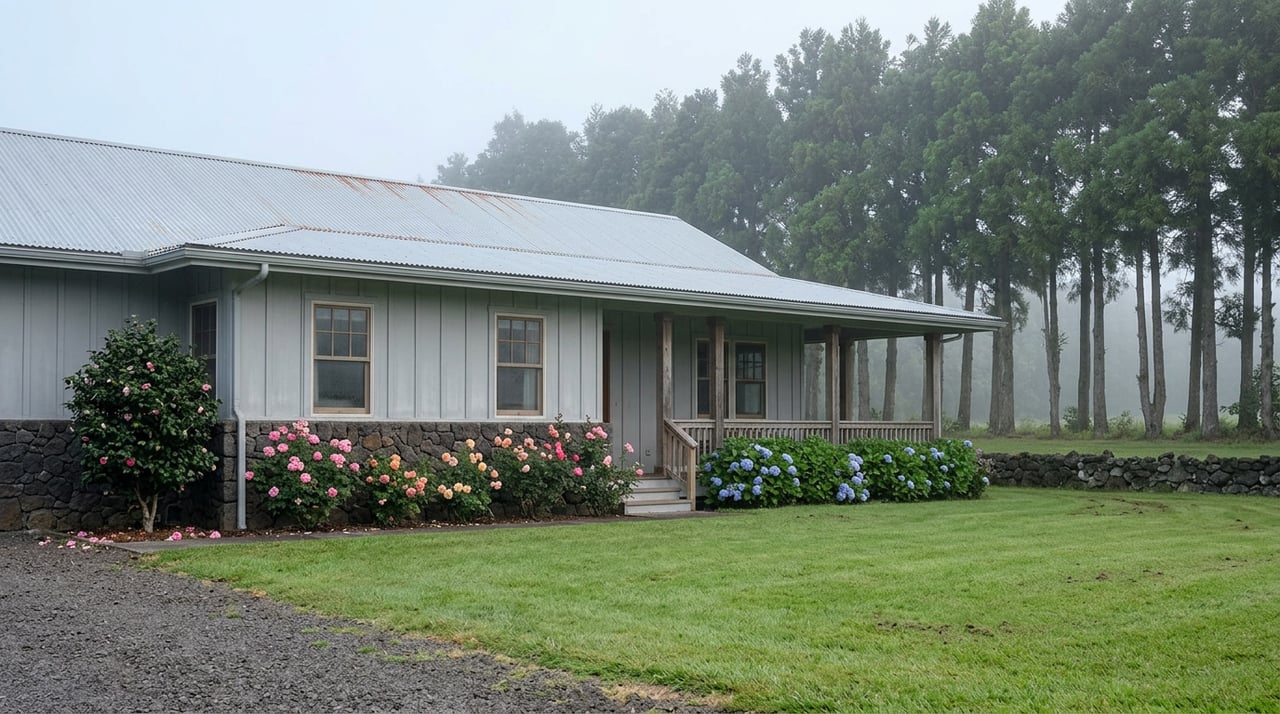
Waimea Doesn't Have One Farmers Market. It Has Four, and Two Share a Driveway.
August 13, 2026
August 13, 2026
Tell a friend to meet you at "the Saturday market" in Waimea and you might spend the next twenty minutes texting directions to two different parking lots. It happens more than people admit. Waimea runs three separate farmers markets on Saturday mornings, plus a fourth on Wednesday, and two of them sit at the exact same address.
If you've lived here a while, you probably have your own routine and assume everyone else follows it too. But ask five neighbors which market they mean by "the market" and you'll likely get three different answers, none of them wrong.
Waimea's Saturday morning lineup includes the Waimea Town Market at Parker School, the Kamuela Farmers Market at the historic Pukalani Stables, and the Kuhio Hale Farmers Market on Mamalahoa Highway. All three open around 7:30 a.m. Add the Pukalani Midweek Market on Wednesdays, and this small upcountry town supports four distinct market operations, each with its own vendors, its own history, and its own reason to exist.
None of them are branches of the same organization. None of them share a vendor roster. The confusion isn't accidental, either. It comes from a quirk of geography that most visitors never notice and most residents have simply learned to work around.
The Kamuela Farmers Market and the Pukalani Midweek Market both operate out of the historic Pukalani Stables at 67-139 Pukalani Road. Same gate, same parking, same paniolo-era buildings. But they are not the same market, and the Kamuela Farmers Market's own website makes a point of clarifying this directly, describing itself as a separate entity from the Wednesday market held at the same location.
That distinction matters if you're trying to remember which day had the vendor you liked. The person selling honey on Saturday may not be the same person selling honey on Wednesday. The two markets are run separately, staffed separately, and stocked separately, even though they share a mailing address down to the digit.
Here's how the three Saturday options break down against each other, since that's where most of the confusion actually lives.
| Market | Location | Saturday Hours | Known For |
|---|---|---|---|
| Waimea Town Market | Parker School, 65-1224 Lindsey Road | 7:30 a.m. to noon | Hot prepared food, wood-fired stone-oven bread, 50-plus vendors |
| Kamuela Farmers Market | Pukalani Stables, 67-139 Pukalani Road | 7:30 a.m. to 1 p.m. | Live music, ranch grounds atmosphere, adjoining Paniolo Heritage Museum |
| Kuhio Hale Farmers Market | Kuhio Hale, 64-756 Mamalahoa Highway | 7:30 to 12:30 p.m. | Longest-running roots, produce-heavy stalls, monthly Vintage Saturday |
The Town Market, founded in 2009 and now home to over 50 vendors, is where you go if breakfast is the point of the trip rather than the produce. The wood-fired bread sells out early enough that regulars plan around it, and the prepared food section draws from real kitchen experience, including one vendor who spent 12 years as sous chef at the Mauna Kea Beach Hotel. Named vendors like Kekela Farms, Ahualoa Farms with its Hawaiian take on chocolate hazelnut spread, Sandwich Isle Bread Company, and Tabakara Lebanese food round out a lineup built for eating on site, not just stocking the fridge.
The Kamuela Farmers Market, launched in 2015 on Parker Ranch's Pukalani Stables grounds, trades some of that food-court energy for atmosphere. Live music runs every Saturday, leashed pets are welcome, and the adjoining Paniolo Heritage Museum offers free admission on market Saturdays, with a portion of vendor fees going directly to the Paniolo Preservation Society's work protecting Hawaii's cowboy heritage. Vendors here lean toward craft and specialty goods: Kamuela Hardwoods, Makua Coffee, Kulina Lani Organic Sourdough, Cupcakes N' Things. If you want the ranch setting to be part of the experience and not just a backdrop, this is the one.
Kuhio Hale is the quiet option, and the one most likely to get overlooked entirely. More than half its stalls belong to actual growers rather than resellers, with produce often harvested the day before or the morning of the market itself. It's smaller, less curated for entertainment, and closer to what a farmers market originally meant before live music and photo ops entered the picture.
Kuhio Hale Farmers Market has also gone by Waimea Homestead Farmers Market and, according to the state's official tourism site, Waimea Nui Farmers Market. That's not a rebrand chasing trends. The market traces back to February 1992, when a hui of five farm owners started selling on the same site now known as Kuhio Hale, on Department of Hawaiian Home Lands grounds. The founding growers formed a corporation, WHFM Inc, in 2008 to manage vendor turnover as the market grew from five sellers to a steady 30 to 35 each week.
That makes Kuhio Hale the oldest of Waimea's farmers markets by at least seventeen years, and arguably the one fewest residents can name correctly. The first Saturday of every month is Vintage Saturday, when cultural and vintage items join the usual produce lineup and vendor counts climb toward 40. If you've never made it out on a first Saturday, you've been seeing a smaller version of what this market actually offers.
Here's a detail that tells you more about how these markets actually operate than any single number could: the Pukalani Midweek Market is frequently described as the largest in the Waimea area by vendor count, drawing 35 to 40 sellers on a Wednesday. The Waimea Town Market, meanwhile, claims over 50 vendors on its own site.
Both can't be the largest, and neither market seems particularly bothered by the contradiction. Vendor counts shift week to week, growers rotate between markets depending on harvest timing, and nobody is tracking attendance with the kind of rigor that would settle the argument. That looseness is part of what makes these markets feel like Waimea rather than a franchised experience. The numbers are approximate because the markets themselves are living, changing things, not fixed venues with a posted capacity.
The three Saturday markets sit close enough together that visiting two in one morning is genuinely practical, not a stretch. A common pattern: start at Waimea Town Market for coffee and something hot off the wood-fired oven, then head to either Kamuela Farmers Market for the ranch setting and live music, or Kuhio Hale if you're after actual produce at grower prices before the morning heats up.
If you're a Kekela Farms regular, know that the farm also runs its own stand separate from all four markets, open Tuesdays from 2 to 5 p.m. and Saturdays from 8 a.m. to noon, directly at the farm on Mana Road. That's a fifth option hiding in plain sight for anyone who wants to skip the crowds entirely and buy straight from the source.
None of this is complicated once you've mapped it out. But almost nobody hands you the map. Most visitor guides flatten all of this into a single paragraph, and even longtime residents tend to know one market well and treat the rest as rumor.
Waimea rewards the kind of attention that notices a shared driveway means two different markets, or that the oldest market in town is also the one hiding under three different names. That's the same kind of attention that matters when you're trying to understand a neighborhood beyond its Saturday mornings, whether you're comparing streets, weighing a move, or just trying to figure out where your new house actually sits in the rhythm of this town.
If you're getting to know Waimea from the inside, whether that means finding your market or finding your street, Denni Keyes has spent a lifetime learning both. Let's Connect.
Stay up to date on the latest real estate trends.
I'm not just a real estate agent — I'm a neighbor, a parent, and a proud member of this island community. My commitment to communication, integrity, and purpose means you'll always have a trusted partner by your side throughout your real estate journey.
69-201 Waikoloa Beach Dr Ste 505 Waikoloa, HI 96738